
Prestige Earns the First Purchase - Only
When the market is filled with 90-point wines, why do scores still work?
When nearly every producer describes itself as mindful, intentional, authentic, and sustainable, why does the language rarely change?
When reviews increasingly sound alike, why do producers keep commissioning them—and consumers keep reading them?
Perhaps because these things are not only descriptions of quality.
They are signals of it.
And when perception becomes reality, the question becomes: how perceptive are the beholders?
Recently, I visited a winery positioned as prestigious: a grand estate, beautiful architecture, expensive artworks, specialized equipment, custom fermentation vessels, and big-name winemakers. Some of their wines had received accolades from well-known critics. Before I tasted anything, almost every detail had already told me the wines were supposed to be exceptional.
Now think like an average tourist, or even your everyday wine lover. When you are surrounded by a series of quality and prestige signals, you would probably assume the wines were fantastic too—and pay the asking price.
In my humble opinion, they were around 30% more expensive than wines of comparable style, complexity, and scale that I would willingly buy elsewhere.
Here is an example. I tasted their Pinot Gris, which is supposed to be a highly regarded wine. It started off like a high-end luxury fashion boutique: fragrant, perfumed even, sweet-smelling, pretty, almost cute.
Then, on the palate, it started to fall flat. The acidity was noticeably lower than I would expect, almost to the point where it became unbalanced with the rest of the wine. Over the next few sips, the imagery shrank. It became a plate of Meyer lemon cake topped with melon balls.
By imagery, I mean the scene, movement, scale, or emotional shape that forms in my mind as I experience a wine. Some wines continue to expand. This one became smaller with every sip.
I asked the host whether the winemaker had intended it to be this way. She said yes.
Alright, fair enough. Maybe I was being too picky.
But every wine I tried afterwards followed a similar line: interesting, tasty, almost experimental in some cases, but rarely as compelling as the positioning suggested. Almost none of them gave me much imagery.
The exception was their top library wine, priced at nearly $300. That one gave me a nebula: depth, scale, movement, something that continued to unfold.
Okay, but $300 for a nebula when I could find wines of similar scale for about two-thirds of the price?
The rest of the tour followed a similar pattern: grandeur and prestige, but surface level. The membership brochures were badly worn. There were spiderwebs underneath a table, unfinished glasses left behind by previous guests, and tables that had still not been cleaned when we returned from the tour.
My point is not to blame them for these individual misses. Any winery can have an imperfect day.
What interested me was the lack of coherence.
An enormous amount had been invested in signalling excellence, while some of the most ordinary details had been allowed to contradict it.
When I shared my experience with others who had visited, apparently I was the only one who had a problem. Yet I was also told that wines supposedly exclusive to members were available to non-members, and that a rosé had been reduced in price to drive sales. Meanwhile, the barrel program seemed to lean heavily on prestige and special access rather than simply letting the wines speak for themselves.
Any one of these things could have a perfectly reasonable explanation. Together, however, they made me wonder whether the image of exclusivity was stronger than the actual demand, how much of the perceived desirability came from the wine, and how much came from everything surrounding it.
This is a risk any ambitious producer can run into. You spend an enormous amount of money believing you are building a prestigious winery, only to discover that you have built the marketing arm of a luxury resort.
An ultra-premium winery is a very different business from a high-end private club that also makes wine. Positioning changes how the business operates, what it prioritizes, and ultimately what the customer is paying for.
Another experience was even more disappointing.
I had been a member of a different winery for five years. I visited almost every year, purchased beyond the usual member allocation, and had always advocated for their wines.
Most recently, when I tried to arrange another visit, I was met with three weeks of silence despite following up. Only after I decided to cancel my membership did someone else step in to try to salvage the situation, and I allowed myself to be persuaded to stay.
Nearly three months after the initial silence, the missed communication still had not been meaningfully acknowledged, and no actual explanation had been given. I also found out, five days before our supposed visit, that the reservation had never been made.
Yes, they comped us a tasting and gave us a dinner to take home, but honestly, I would much, much rather the original communication had not been missed at all.
I felt ashamed of accepting the comp, as though accepting it meant the original failure no longer mattered.
It left a bad taste in my mouth. Now, whenever I open a bottle from that winery, it reminds me of the experience.
The wine itself may not have changed.
My experience of it did.
I have stopped buying from producers for similar reasons before. This time, I already know how the decision will be made. I just have not opened the next bottle yet.
Perhaps wineries like the one in my first example will continue to exist. Maybe they will even remain profitable after paying off the grand estate and everything else built around it.
But I am a firm believer in coherence. I also believe that what is tolerated becomes culture.
A spiderweb does not mean corners are being cut in the cellar. A worn brochure does not mean the wine is declining. An untidied table does not invalidate a critic’s score. But each one reveals something that was either no longer being noticed or had been noticed and tolerated.
If that mindset goes unaddressed, how long before the same tolerance begins to show elsewhere?
This brings me back to the opening questions.
A score is supposed to signal quality.
Architecture is supposed to signal care.
Exclusivity is supposed to signal demand.
A premium price is supposed to signal value.
A review is supposed to signal independent judgment.
Maybe that is why so many reviews sound alike. Producers keep commissioning them because familiar language reinforces what they already want the market to believe. Consumers keep reading them because, when quality is difficult to judge before buying, reassurance is useful.
Hospitality is supposed to signal genuine care.
The problem begins when the signal becomes more convincing than the thing it is supposed to represent.
Consumers may accept the reassurance until their own experience contradicts it. That does not make them dumb. It makes them human.
What should scare producers is not that consumers can be influenced by prestige. It is that producers may begin to believe consumers will not care enough to act once reality stops matching the signal.
Oh, I think they will.
They just do not always speak up.
They quietly stop renewing, buying, and recommending. They move toward the producers who truly care.
Silence should never be mistaken for loyalty.
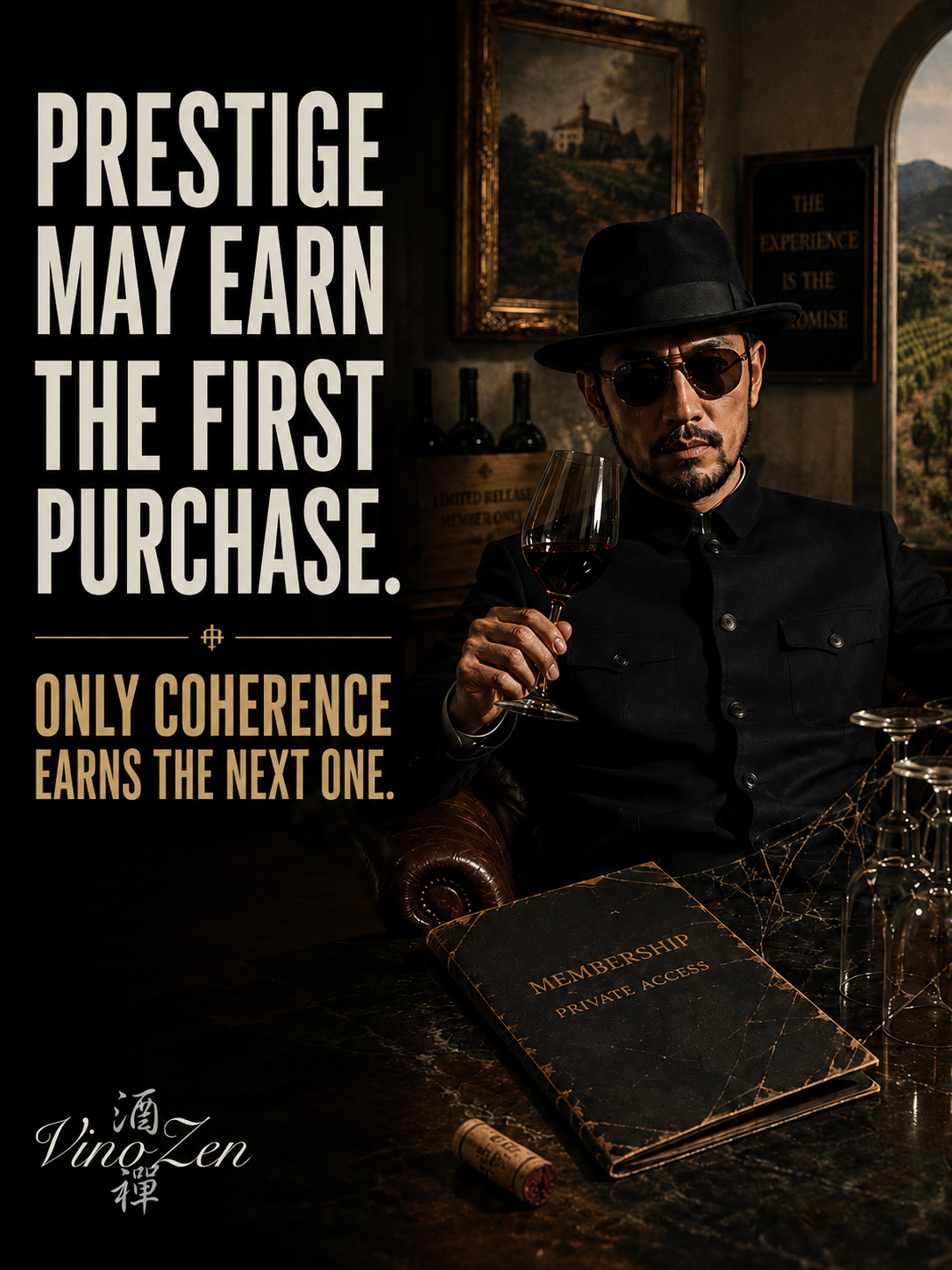
Prestige may earn the first purchase. Only coherence earns the next one.