
Tasters First
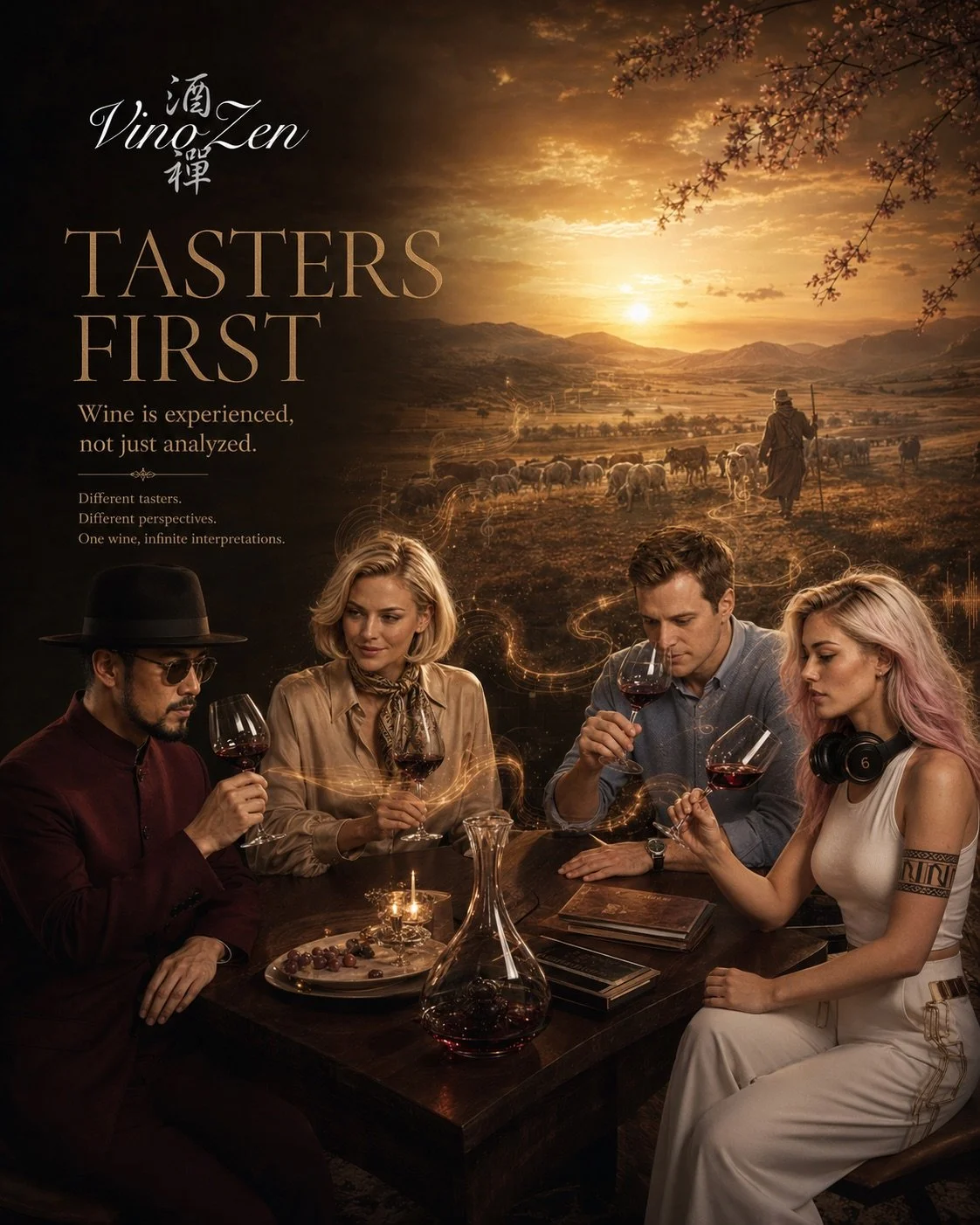
How about we start talking more about the experience of tasting wine, rather than only the advances in viticulture and winemaking or how to become a more skilled blind taster?
Don’t get me wrong. Those topics are part of how these wonderful drinks come to exist and how skilled professionals learn their craft. We already have many industry authorities talking about them. With the advancement of AI, there is now even more of this kind of content because information is cheaper and easier to produce than ever.
But access to information is not the same thing as desire.
At the end of the day, wine is about enjoyment. Not everyone wants to become a professional, but that does not mean they cannot get the most out of each glass. Anyone holding one is already a taster.
If information is so much more accessible, we should ask what all of it is actually doing. Is it giving people more reason to want wine, or only more ways to learn about it?
According to IWSR’s final 2025 data, total beverage-alcohol volume fell by another 2% worldwide. It was the third consecutive annual decline. Wine fell by 5%, while RTDs grew by 3%. IWSR
These figures do not show that the way we communicate about wine caused its decline. Wine’s decline is bigger than the way we talk about it. Price, health concerns, moderation, changing habits and economic pressure all matter. RTDs are also often cheaper, more convenient and require less commitment than buying a full bottle of wine.
But the decline sharpens the question. When people are choosing more deliberately, are we giving them reasons to want wine, or merely more information about it?
Wine may never consistently beat RTDs on price, convenience or ease of purchase. That makes the question of desire—and how we communicate the experience of wine—even more important.
Yet we often begin with production methods, regions, classifications, scores, accolades and tasting vocabulary. We start with what the industry knows and endorses instead of what the taster experiences.
Compare the following descriptions of the same wine I tasted. I will leave out its identity because that is not the point here.
“This wine went through whole-cluster co-fermentation of 85% Pinot Noir and 15% Riesling. It tastes of vibrant, earthy and funky cherry fruit.”
“This wine made me feel as though I were standing in a vast pastoral landscape, watching a nomad herd sheep and cattle. It was riveting, yet calming.”
The first begins with the wine: how it was made and what someone should look for. The second begins with the person experiencing it and explains why the wine stayed with them.
Scores and accolades operate differently again. They can help someone choose among bottles, but they tell us how an authority evaluated a wine, not why a particular person might care about it.
Neither description is entirely objective. “Cherry fruit” is still one taster’s perception, simply expressed through a more familiar and standardized vocabulary. The pastoral image is more personal, but it is no less real to the person experiencing it.
Both have value. The first can deepen understanding and help us communicate with greater precision. But for someone who does not already care about wine, the second may give them a more immediate reason to become curious.
Formal wine education has given the trade a shared language, clearer standards and a way to assess competence. But several of modern wine’s most influential education and credentialing systems date only to the mid-20th century, and they were originally created mainly for people working in the trade.
The first Master of Wine examination was held in 1953. WSET was founded in 1969 to serve the educational needs of the UK wine and spirits industry, and the first Master Sommelier examination was held that same year. The Court of Master Sommeliers was formally established in 1977 to standardize the training and certification of sommeliers and improve wine service in restaurants. These systems may welcome enthusiasts today, but consumers were not the audience they were originally designed to serve. Masters of WineWSET.
Humans, meanwhile, have been making, enjoying and experiencing wine for roughly 8,000 years.
For most of wine’s history, people did not communicate their experiences through scores and formalized tasting notes. Those experiences were personal. They were connected to places, people, occasions, emotions, metaphors and memories. Long before modern wine education existed, people expressed their admiration for wine through poetry, song, ritual and art.
Over time, the tools we created to standardize how we describe and assess wine also began to shape what people believed they were supposed to experience. We became better at explaining what wine is, but perhaps not always better at explaining why someone should care.
We now sometimes seem to need a neuroscientist or sensory expert to confirm that imagery, emotion and memory are legitimate parts of tasting. Their work can help explain and validate these responses, but it does not grant us permission to have them. These responses were never foreign to wine. We simply became less comfortable expressing them to one another—and perhaps even to ourselves—because they no longer sounded like the accepted language of serious tasting.
A personal response is not a technical fact about the wine, but it is often where engagement begins. Knowledge can deepen that experience, sharpen perception and help explain what may have contributed to that response. It should not become the condition for having an experience in the first place.
Talk about how wine feels, where it takes us, who we share it with, what it reminds us of and why a particular glass stayed with us after it was gone. Once someone has a reason to care, bring in the vineyard, the winemaking, the structure and the history.
Experience first. Knowledge in service of it.
That is what I mean by putting tasters first.